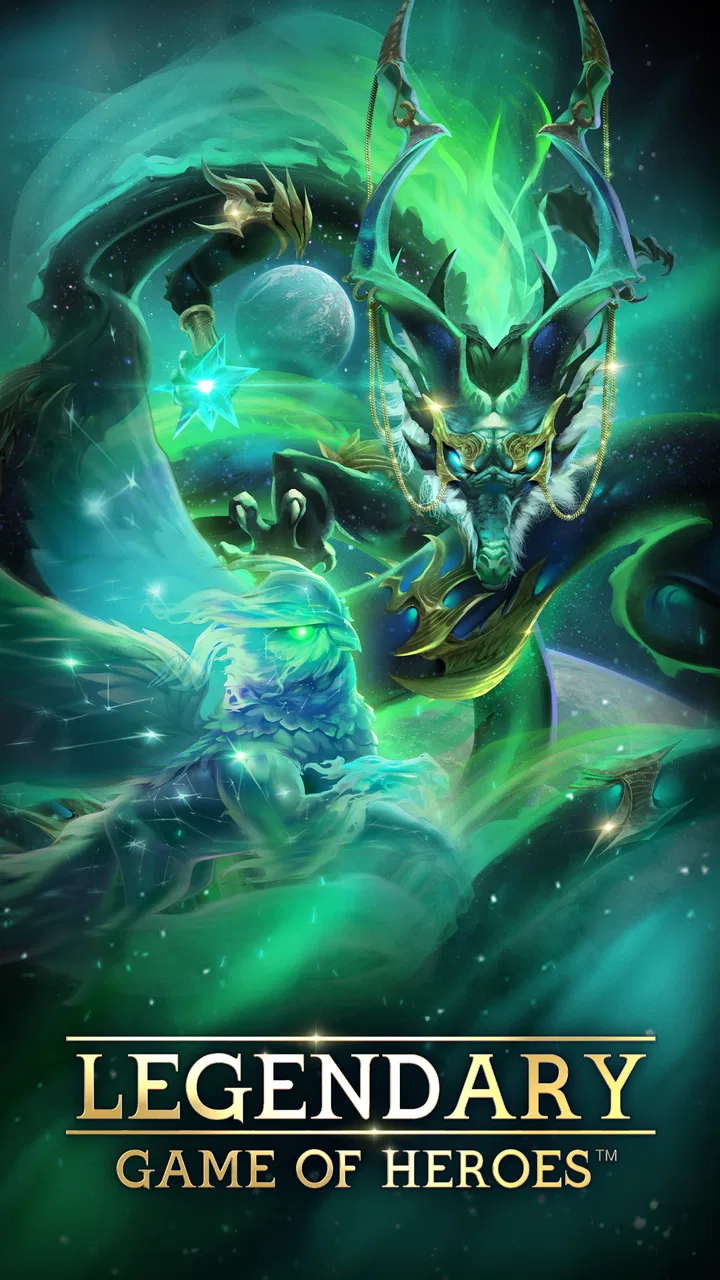
Legendary: Game of Heroes
- 4.2
- Rating
- 5.00M
- Installs
- Free
- Price

 Analysis by App-foxy
I spent time with Legendary: Game of Heroes as a mobile role-playing game built around matching gems, developing a card collection, and taking on quests. That combination gives it a more deliberate feel than a simple match-three game: every move is tied to a team, a battle plan, and the longer-term question of which cards deserve attention. It is free to download, but its value depends heavily on how comfortably you can enjoy gradual progress without treating optional purchases as part of the normal price.
Developed by PerBlue Entertainment, the game has been available since August 10, 2016, and its current version is 3.19.22. It carries a Teen content rating and requires Android 6.0 or later. On the store, it sits in the role-playing category with a 4.2 average from around 173 thousand ratings, while its install count has passed 5 million. Those figures suggest a well-established audience, but they do not automatically make it the right choice for every puzzle or RPG fan. The important question is whether its card-building loop matches the way you like to play.
How the puzzle battles and card progression fit together
The central appeal is the meeting point between a quick visual puzzle and a party-building RPG. Matching gems is immediately understandable, so I could begin playing without learning a complicated control scheme. The deeper layer comes from choosing and improving cards, then thinking about how those choices affect the next encounter. A strong move is not only about clearing a few pieces; it is also about supporting the team I brought into battle.
You May Also Like

 Blood Strike: 2.5 Anniversary
Blood Strike’s Loadouts Turn Every Drop Into a Tactical Gamble
A close look at Blood Strike’s custom loadouts: how fast access to signature weapons reshapes its battle royale rhythm, rewards preparation, and narrows the gap between fights.

 Pandora - Music & Podcasts
Pandora’s Music Is Easy to Start, but Harder to Recover
Pandora’s strength is its low-effort path from a seed to a station. Its weak spot is how much confidence it asks you to place in connection, setup, and quiet recovery.

 8 Ball Pool
 Is Built on Rivalries, Rematches, and Routine
A close look at the rivalries, rematches, shared routines, and unanswered safety questions that turn a quick pool match into a persistent mobile community.

 Samsung Music
’s Quiet Strength Is Playing What You Already Own
Its reach comes less from spectacle than from dependable access to a personal library. That simplicity is both the app’s strongest retention engine and its ceiling.

 AccuWeather: Weather Radar
AccuWeather Review: A Quick, Clear Forecast for Everyday Decisions
For everyday plans, the best forecast is the one you can understand quickly. AccuWeather makes rain timing, radar, and local conditions easy to act on, with a few trade-offs.

 Hill Climb Racing
Why Hill Climb Racing Still Turns Crashes Into One More Run
A tiny car, a bumpy hill and one more upgrade: Hill Climb Racing keeps resurfacing because its simple chaos makes every near-miss feel personal.
More From Our News Desk



That structure makes each session feel more purposeful than an ordinary casual puzzle break. A few minutes can be enough to complete a small objective or make progress through a quest, while a longer session gives room to examine the collection and consider a different setup. I liked that the game gives the puzzle board a reason to matter. The matching is the action, but the cards provide the context.
The card system also changes how I look at failure. Losing a battle does not simply mean I made one poor move. It may point to a team that lacks the right balance, an upgrade that should have been prioritized, or a habit of making matches for immediate points instead of preparing a better turn. That makes experimentation worthwhile. Rather than repeating the same board mechanically, I found myself asking what the encounter was revealing about my current deck.
For new players, the most useful early habit is to avoid spreading every resource across every card. A broad collection can be tempting, especially when new characters appear, but a focused core team is easier to understand and improve. I recommend testing a small number of cards through several quests before investing heavily. This gives you a clearer sense of which abilities fit your matching style and prevents the collection screen from becoming a pile of half-developed options.
Another practical tip is to pause before making the obvious match. The first available combination is not always the best one. Look for a move that creates a better follow-up, supports the color or ability you need, or opens space for a larger chain. This is where the game separates itself from a purely reflex-based puzzler. You can play quickly, but careful players usually get more from the board.
Why the deck matters more than a single lucky move
The card-building element gives the game its identity. In many match-three titles, the board is the entire experience, and progression mainly means unlocking another stage. Here, the deck gives you a reason to revisit the puzzle system. A card is not merely a collectible image; it becomes part of the way you approach future battles.
I found it helpful to think in terms of roles rather than chasing the most attractive card. A team that looks powerful on paper may be awkward if its abilities do not work well together. Conversely, a less glamorous card can earn its place if it helps the rest of the deck operate more reliably. That is a useful trade-off for players who enjoy making small strategic adjustments instead of simply equipping the newest item.
The best workflow is to change one part of the team at a time. If you replace several cards together, it becomes difficult to tell which change improved the result. Swapping one member, replaying a comparable challenge, and observing the difference makes progression feel more like learning than guessing. This is a small discipline, but it saves resources and gives the RPG layer more meaning.
Quests provide the framework that keeps those choices moving forward. They give the matching battles a sequence and help turn individual wins into a broader adventure. I prefer this kind of structure to an endless stream of disconnected puzzles because it gives me a reason to return even when I am not chasing a new card. The downside is that players who only want short, self-contained rounds may find the surrounding progression more involved than necessary.
What the free entry actually means
The game is free to download and play, so the initial financial barrier is low. That makes it easy to test the puzzle system before deciding whether the card progression suits you. You do not have to commit money simply to discover whether the basic loop is enjoyable, which is important in a genre where screenshots can make very different games look similar.
There are in-app purchases ranging from $0.99 to $199.99 per item. I would treat that range as a reason to decide on a personal spending limit before playing, not as proof that purchases are required for every player. The free access has real value if you are comfortable progressing at the game’s natural pace and resisting the urge to solve every setback immediately with a purchase.
That distinction matters. A free game can still be expensive in practice if its design constantly encourages spending, while a game with optional purchases can be perfectly worthwhile for someone who never buys anything. My assessment here is based on the confirmed cost structure: entry is free, while individual purchases can become substantial. I would not describe the game as a paid-value purchase because there is no upfront price; I would describe it as a free trial-friendly RPG whose long-term value depends on your purchasing boundaries.
For a parent or anyone sharing a device, the Teen rating and the presence of purchases deserve attention. The rating tells you the intended age range, while the purchase range means account controls and a clear household rule are sensible. A player who wants a completely purchase-free environment may be happier with a premium puzzle RPG that charges once and avoids this kind of spending decision.
The everyday use case: a short break with a longer plan
I can see this working well during a commute, a lunch break, or a quiet moment at home. The matching itself is accessible enough for a short session, but the deck gives the session a lasting purpose. I might complete a quest, notice that one card is underperforming, and spend the next break trying a different team rather than simply starting another unrelated level.
The game is less suitable when I want uninterrupted concentration on a long story or a purely competitive challenge. Mobile role-playing games often ask players to move between battles, collection decisions, and progression screens, and that rhythm can feel fragmented if I am looking for a single continuous adventure. Legendary: Game of Heroes works best when I enjoy checking progress in small pieces.
It also rewards patience more than urgency. If you dislike waiting for a collection to develop or prefer to have the full strategic picture immediately, the gradual card loop may feel restrictive. On the other hand, if you enjoy seeing a team become more coherent over time, the slower buildup is part of the satisfaction rather than an obstacle.
How it compares with familiar alternatives
Compared with a standard match-three game, this title offers more reasons to think beyond the current board. The card deck and quests make each puzzle part of a role-playing progression, so the reward is not limited to clearing the screen. The trade-off is that there is more to manage. Someone who wants a quick, uncomplicated puzzle may prefer a traditional match-three alternative with fewer collection decisions.
Compared with a conventional mobile RPG, the main action is more hands-on and puzzle-driven. Instead of relying primarily on menus, automatic battles, or character screens, you participate directly through gem matching. That can make battles feel more interactive, but players who prefer tactical positioning, exploration, or a large story campaign may find the puzzle board too central.
It also differs from a premium RPG that asks for one purchase and then keeps its progression straightforward. Here, the free entry is more approachable, but the in-app purchase range introduces a financial choice that a one-time purchase avoids. I would choose Legendary: Game of Heroes for flexible testing and short sessions; I would choose a premium alternative for predictable cost and a more self-contained experience.
Where the friction becomes noticeable
The same systems that create depth can also create clutter. A growing card collection requires attention, and it is easy to lose sight of the basic question: which team is actually helping me win? Players who enjoy organizing builds will see this as part of the game. Players who want the next puzzle immediately may experience the collection layer as interruption.
There is also a real temptation to confuse rarity or novelty with usefulness. A new card can look exciting without fitting the team I already understand. My advice is to judge cards by how they change the way you play, not by the fact that they are new. Keep notes mentally or on paper about which combinations produce reliable results, especially if you are trying several teams.
The purchase structure is another limitation, even for disciplined players. The game can be entered for free, but the upper end of the listed purchase range is high enough that I would never make a hurried decision after a frustrating loss. If a battle makes me feel that spending is the only way forward, that is my cue to step back, revisit the deck, and try a different approach. The game is most enjoyable when purchases remain optional rather than emotionally driven.
Long-term players should also be prepared for the possibility that the experience feels more like a continuing hobby than a compact game with a neat endpoint. The established release history and active current version point to a title designed to remain playable over time. That is attractive if you want an ongoing collection project, but less appealing if you prefer to finish a defined campaign and move on.
Who will get the most value from it
I recommend it most strongly to players who like both puzzle decisions and collection management. If you enjoy comparing cards, refining a team, and learning why one matching approach works better than another, the game gives you enough connected systems to stay interesting. It is also a good fit for someone who wants a free starting point before deciding whether to invest more time.
It suits casual players who are happy to make gradual progress, provided they do not expect every improvement to arrive immediately. The short-session format is useful, but the real payoff comes from returning to a deck and seeing how small changes affect later battles. That makes it more rewarding for a patient player than for someone who needs constant, instant rewards.
I would be cautious about recommending it to anyone who wants a strictly purchase-free experience with no spending prompts or to someone looking for a premium RPG with a fixed, known cost. I would also point puzzle purists toward a simpler match-three game if they do not care about cards and quests. The extra systems are the reason to choose this title, not an optional decoration.
My recommendation after weighing the cost and the commitment
Legendary: Game of Heroes is worth trying because the free entry lets you evaluate its central loop without paying upfront. I enjoyed the way gem matching feeds into card decisions, and I think the deck gives ordinary puzzle moves more consequence. The game has enough role-playing structure to support regular visits, while still being approachable in short sessions.
My recommendation comes with a clear boundary: play it as a free game first, set a spending limit before any purchase, and only invest time or money if the card-building decisions themselves are enjoyable. The listed purchase range means I would not treat it as a harmless impulse-buy environment. Its value is strongest for players who can appreciate slow collection growth and make progress through experimentation rather than rushing past obstacles.
If that sounds like your style, PerBlue Entertainment’s game offers a satisfying blend of puzzle action, quests, and team planning. If you want a predictable one-time price, a purely casual board, or a story-led RPG without collection management, another option will serve you better. For me, the final verdict is a cautious recommendation: free to try, strategically engaging, but best enjoyed with firm spending limits and realistic expectations about gradual progression.
FAQs for Legendary: Game of Heroes
01What is Legendary: Game of Heroes?
Legendary: Game of Heroes is a fantasy role-playing puzzle game for Android and iOS. It combines match-three combat with collectible card mechanics, allowing you to build a team of heroes, upgrade their abilities, and fight through story stages, events, dungeons, and player-versus-player challenges. Battles are turn-based, so planning your matches and choosing the right team matters as much as making quick moves.
02Is Legendary: Game of Heroes free to play?
Yes, Legendary: Game of Heroes can be downloaded and played for free, but it includes optional in-app purchases. You can progress without spending money, although premium currency, packs, energy, and upgrade materials may make certain improvements faster. The game also uses timed activities and recurring events, so free players may need more patience and careful resource management to keep pace with highly active or paying players.
03Does Legendary: Game of Heroes require an internet connection?
An internet connection is generally required for Legendary: Game of Heroes because much of the experience depends on online accounts, live events, guild features, competitive modes, and synchronized progress. Although some menus or previously loaded content may appear briefly without a stable connection, the game is designed for online play. A reliable Wi-Fi or mobile data connection is recommended to avoid interruptions during battles and rewards.
04Is Legendary: Game of Heroes suitable for beginners?
The game is accessible to newcomers because its match-three combat system is easy to understand, and the early stages introduce the main mechanics gradually. However, the number of heroes, elements, equipment upgrades, team combinations, and event systems can become confusing after the opening chapters. New players should focus on developing a balanced team, saving premium resources, and learning which heroes work well together instead of upgrading everything immediately.
05Does Legendary: Game of Heroes include multiplayer or guild features?
Yes, Legendary: Game of Heroes includes social and competitive features that go beyond the single-player campaign. Players can join guilds, cooperate during special events, communicate with other members, and compete in different ranking-based activities. Guild participation is useful because it can provide additional rewards and progression opportunities. However, the competitive environment may feel demanding, particularly for players who do not log in regularly or spend on premium content.
Pros
- Deep team-building system with many heroes
- skills
- and elemental combinations.
- Regular events and challenges provide plenty of content beyond the main campaign.
- Guild features encourage cooperation through raids
- chat
- and shared objectives.
- Colorful fantasy artwork gives battles and character screens a polished appearance.
- Multiple progression paths let dedicated players improve heroes over time.
Cons
- Energy limits can interrupt play sessions
- especially during extended campaigns.
- The large roster and upgrade systems may feel overwhelming for new players.
- Progress can become heavily dependent on luck when summoning powerful heroes.
- Competitive modes may favor players who spend regularly on premium resources.
- Frequent events and daily tasks can make the game feel demanding over time.

Legendary: Game of Heroes
Gallery